You are now in Act II (this is where all the fun stuff happens!). Before you start writing the next element of the story, pause to examine how it will differ from the previous ones.

In Act I, you did a lot of set up, introduced the MC, established their needs vs. wants, introduced the main story problem the MC will be addressing, established why they must address it, gave them a helping hand (and/or swift kick in the bum) from a mentor, and then your wee little MC crossed the threshold.
They are officially ADVENTURING!
They grow up so fast…
One of the key differences for MCs in Act II to those of Act I is that they are an active participant in the plot. During Act I a lot of things were happening to the MC and they were largely reactive. During Act II, events will still happen, but now the MC is acting according to their own agenda, motivated by their own goals.
Act II is all about Try-Fail cycles. It’s also all about the friends, frienemies, and enemies the MC makes along the way.
Enemies
Enemies come in two varieties: Villains and antagonists.
Both villains and antagonists are the MC’s enemies. Both villains and antagonists cause conflict of the Person vs. Person variety (more on that below). So, what’s the difference?


Let’s start with the role of the villain in your story. They are a bad baddie. Seems redundant, yeah, but bear with me. What sets a villain apart from an antagonist is not that they oppose the MC, but rather why. Unlike an antagonist, a villain is motivated by evil – whatever that means in your story world. They know they are doing the wrong thing, and they’re gonna do it anyway. They might even indulge in some evil chuckling, hand-ringing, and/or monologuing about their plans for Mr/Mx/Ms Bond’s benefit.
That’s not to say the villain believes they’re evil. Almost no one thinks they’re evil. Even the worst of the worst find ways to justify their actions in their own minds. Whether it be for the greater good, because they alone know best, or they are meting out righteous judgement upon deserving miscreants they’re doing it for the right reason…according to them.
Antagonists are a bit more complicated and given the right circumstances, can evolve into villains. But how do they start out?
An antagonist can by anyone. A best friend? Yep. A lover. Sure. A parent, child, sibling? Indeedly do.
Critically, no matter what the antagonist is doing, they are not driven by an evil agenda. Rather antagonists simply disagree with the MC and that disagreement creates conflict, challenges, obstacles for the MC.
Example
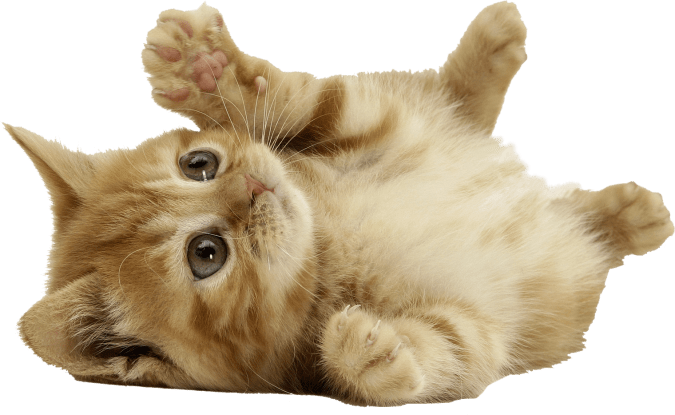
Matt wants to adopt a shelter kitty (adopt, don’t shop!). When Matt arrives at the shelter he’s met by Andrea who takes him back to look at the adorable fur babies in need of forever homes. Matt find the perfect orange tom, but as he prepares to take Marmalade home, Andrea tells him that’s impossible. Is Andrea a villain or an antagonist?
Depends on her motives for standing between Matt and Marmalade’s happily ever after.
If Andrea has already decided to add Marmalade to her collection of twenty-seven matching orange kitties, she’s a villain. She’s acting for purely selfish reasons, denying Marmalade the love and attention a single cat can expect while also pulling a bait-and-switch on Matt because she told him he could adopt any cat, despite having no intention of allowing him to do so. She lied!
On the other hand, Andrea might be required to do a home visit with Matt to ensure Marmalade’s going to a good home or she might need Matt to show proof that he has a veteranarian lined up to take care of Marmalade or Marmalade might need to complete a course of medication that needs specialized training to administer.
If Andrea’s motivations for opposing Matt aren’t selfish or ‘evil’, she’s an antagonist, not a villain.
Allies
Like enemies, allies come in a variety of story roles. An ally can be a friend, a lover, family members, a mentor (remember them?), a sidekick, or just about anyone else you can think of who helps the MC on their quest.

An ally doesn’t always agree with the MC. There may even be times when the ally is also an antagonist, but their heart is always in the right place and they are ultimately on the MC’s side.
One of the fun things friends contribute to the story is subplot(s). Friends have their own motivations, agenda, and/or goals. Often these coincide with the MC’s, but sometimes they don’t. They might even clash, creating more conflict with high emotional stakes. If the MC can’t resolve the conflict, not only will they fail, they risk losing a friend, and even gaining a villain.
Tests
Enemies and friends are all fine and grand when it comes to Person vs Person conflicts, but what about the other kinds?
Wait! What other kinds? Ah, yes. We haven’t talked about the kinds of conflict yet.
The best breakdown I’ve seen comes from the ever-knowledgable Eric Witchey, who I’ll paraphrase here:
Types of Conflict
- Person vs. Person – This is where two or more people disagree about something. It can be as small as a brief squabble, or as epic as an intergalactic war.
- Person vs. Self – This is internal conflict and there should be a good amount of that in any story where a MC has growing and changing to do. Some types of stories, such as literary fiction, rely more heavily on Person vs. Self conflicts than others, but regardless of what type of story you’re working on, your MC should have at least one moment of self-doubt, reflection, awareness, etc.
- Person vs. Environment – This is when the MC faces non-sentient (because, yes, aliens, fae, and/or humanoid monsters, would fall into the Person vs. Person category) foes. This can literally be the environment, such as in a story of survival, or a less obvious version, such as a human-made systemic challenge. Your MC may be struggling to break free of an oppressive society or fighting against an institutional or structural problem. A lot of dystopian fiction falls into the Person vs. Environment type.
Most stories have more than one type of conflict. For example, a story about a young woman struggling to escape the confines of Victorian society and pursue her dreams of being a naturalist is primarily a Person vs. Environment story. She’s fighting against the culture that is trying to force her into a loveless marriage at a young age and into the role of motherhood, which she may not even want. Within that context, she might have some Person vs. Person conflicts with specific members of society, such as a grumpy governess, or an uncaring father who is only interested in how her marriage will enhance his business interests. Additionally, she might have literal Person vs. Environment conflicts when she goes on an expedition and faces a storm or other outdoor challenge. And through all of this, she’ll be having ongoing Person vs. Self conflicts as she wonders if perhaps everyone is right and she should just give up her dreams and marry Sir Norbert Reginald Forthingham III. Maybe something is fundamentally wrong with her that she so stubbornly resists? And so on and so forth. You get the idea.
Now to pull it all together!
Writing Exercise
- List potential Person vs. Self conflicts
- List potential Person vs. Environment conflicts
- List potential enemies
- List potential friends/allies
- From those two lists, list potential Person vs. Person conflicts
- Get out some note cards, blank pieces of paper, or a fresh document on your favorite writing program/app
- Make a list of 10-15 scenes. Bonus points if you can use more than one type of conflict*
- Play with these scenes to create a Try-Fail cycle that moves the plot forward in a logical way
Example
Scene – Sean wants to get a latte. He’s trying to cut back on caffeine (Person vs. Self). The lashing rain forces him inside a cafe (Person vs. Environment), which his ex-girlfriend owns and operates (Person vs. Person).
 M. K. Martin